
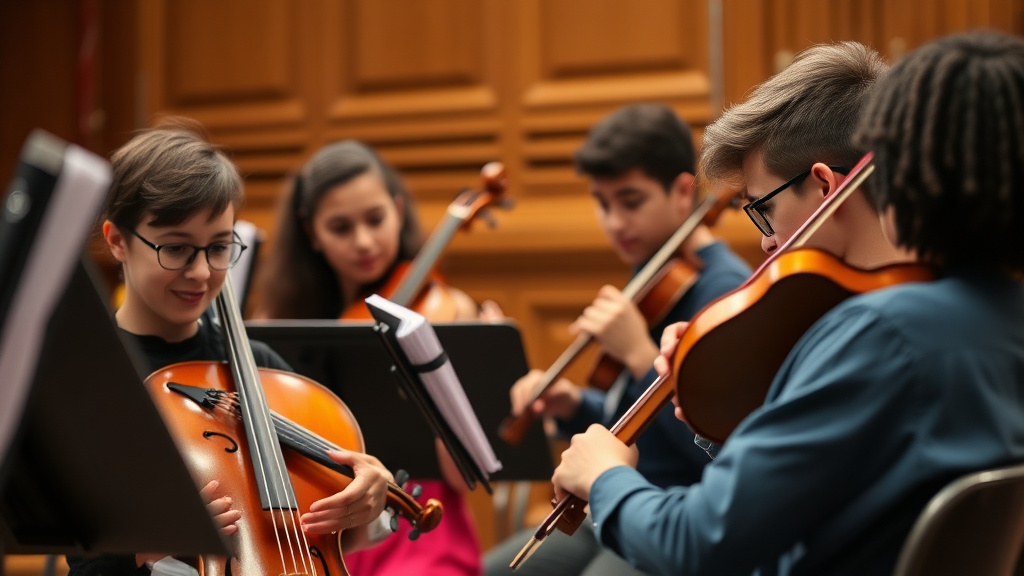
For years, classical music education remained largely inaccessible to low-income urban youth, producing a major cultural and educational divide. However, a growing movement of creative initiatives is breaking down these barriers, providing orchestras, music lessons, and music theory instruction directly to underserved communities. This article investigates how dedicated organizations are improving lives through classical music, assessing the growth of these initiatives, their measurable impact on student achievement, and the remarkable ways music education is transforming opportunities for underprivileged young people across America’s cities.
Removing Barriers Through Music Training
Classical music training has traditionally functioned as a gateway to cultural development and academic excellence, yet remained largely restricted to privileged areas with means to provide private instruction and access to instruments. City-based learners from low-income families faced formidable challenges, such as expensive fees, limited school funding, and physical separation from performance venues. This gap reinforced cycles of inequality, denying talented young musicians the chance to develop their potential. Recognizing this injustice, committed institutions and advocates have taken action to democratize classical music instruction, providing transformative instruction open to all students.
Contemporary innovative programs implement diverse strategies to overcome traditional obstacles, from offering complimentary instruments and lessons to offering meals and transportation paired with lessons. These initiatives acknowledge that gifted individuals exist across all communities, independent of economic background, and that music education can act as a transformative force for self-improvement. By embedding music education within cultural organizations, schools, and community spaces, these initiatives reach students in their own environments. The findings have been remarkable, with young participants exhibiting improved academic performance, stronger interpersonal abilities, and increased self-assurance in their abilities.
The development of classical music instructional offerings represents more than charitable outreach; it indicates a significant change in how communities recognize and fund young people’s development. These programs acknowledge that music education develops analytical skills, self-control, and emotional awareness—skills essential for success in all academic disciplines and personal endeavors. By reducing economic and practical constraints, programs ensure that economic circumstances no longer dictate whether a student can attain musical excellence. This expansion of classical music opportunities creates pathways to advancement historically denied to urban youth.
Program Development and Impact on Communities
Over the last ten years, classical music education initiatives have expanded exponentially across large U.S. metropolitan areas, engaging thousands of historically marginalized students. Organizations like El Sistema-based initiatives have created musical ensembles in communities where instruments were once considered unattainable resources. These programs collaborate with schools, community centers, and local governments to create sustainable, comprehensive music education ecosystems. The nationwide expansion reflects growing recognition that classical music education deserves equal priority alongside traditional academic subjects in urban educational landscapes.
Community impact extends far beyond individual student achievement, as these programs build stronger communities and encourage social bonds. When young musicians collaborate in orchestras, they build collaborative skills and mutual respect among people from different backgrounds. Public concerts and community events showcase student talent, building pride and investment in neighborhood youth initiatives. Schools and neighborhoods gain from greater cultural engagement, enhanced school climate, and improved ties between educational institutions and their surrounding communities.
Overcoming Institutional Challenges
Successful programs tackle multiple systemic barriers in parallel, understanding that access demands comprehensive support outside of music instruction alone. Many provide free instruments, removing the financial burden that traditionally prevented low-income families from engaging in classical music. Transportation assistance ensures students can attend lessons and rehearsals irrespective of neighborhood location. Meals and mentorship programs tackle broader needs, recognizing that hungry, unsupported students cannot fully connect with their education.
Societal and emotional barriers receive equal attention, as many urban students have limited experience with classical music and may initially find daunting unfamiliar traditions. Skilled instructors establish supportive, inclusive spaces where students sense appreciation and encouraged to take risks. These programs celebrate diverse musical backgrounds while presenting classical music, enabling participants to view classical music as meaningful and approachable rather than restrictive or inaccessible. This culturally informed method has proven crucial to fostering authentic participation and long-term commitment among participants.
Community Initiatives Making a Difference
Community-led Programs Transform City Neighborhoods
Grassroots groups are spearheading meaningful improvements in metropolitan areas by creating inclusive orchestral training programs. These grassroots initiatives partner with local schools, community centers, and libraries to provide accessible training to students from low-income backgrounds. By removing financial barriers and bringing professional musicians into underserved areas, these programs demonstrate that orchestral training flourishes outside traditional elite institutions. Organizations like Sistema-based organizations have fostered dynamic ensemble groups where participants unlock their abilities through group performance and collaborative learning.
The effectiveness of these ground-level programs lies in their deep community connections and culturally tailored methods. Community-based groups understand the particular difficulties facing urban youth and create initiatives that address their specific needs and contexts. Many programs offer adaptable schedules, transportation assistance, and guidance combined with musical instruction. This comprehensive support system guarantees that students can continue their participation and develop meaningful relationships with instructors. Teachers skilled in both classical music and community involvement establish inclusive spaces where every student feels valued and equipped to reach musical excellence.
Financial structures for these programs have developed to feature grants, corporate sponsorships, and philanthropic support. Community leaders have strongly pushed for sustained investment in music education as a critical component of youth development. Many programs leverage partnerships with professional orchestras, universities, and music schools to access expertise and resources. This collaborative approach maximizes impact while distributing costs across multiple stakeholders, making classical music education increasingly sustainable in urban communities across the nation.
Student Achievement Testimonials and Client Testimonials
Individual student achievements showcase the profound effect of classical music programs that are accessible. Young musicians who began with no musical background have progressed to perform in local orchestral groups, obtain scholarships to prestigious universities, and motivate other students. These testimonials demonstrate how classical music education builds confidence, discipline, and scholarly performance outside music class. Students regularly describe enhanced attention, enhanced problem-solving skills, and stronger connections to their schools and communities through their musical experiences.
Teachers and guardians highlight the comprehensive advantages they observe in participating students. Beyond musical proficiency, students show greater confidence, better interpersonal abilities, and greater academic engagement across all subjects. Many students attribute their success to music instructors with offering guidance and support that extended far beyond formal training. These individual stories illustrate how music training in classical styles serves as a powerful catalyst for individual growth and social mobility among disadvantaged young people in cities.
Infrastructure and Resource Development
Expanding classical music programs demands substantial funding in physical infrastructure and learning materials. Nonprofit institutions have strategically converted vacant properties into music schools, outfitted studios with quality instruments, and developed online instruction systems for remote instruction. Thoughtful investment planning ensures that participants obtain access to the same high-quality instruments and resources offered in affluent private academies. This facility expansion represents a pledge toward long-term sustainability and fair distribution.
Technology integration has revolutionized how programs deliver music instruction in classical genres in under-resourced environments. Digital classes, virtual ensemble rehearsals, and online music collections broaden learning possibilities beyond conventional classroom environments. Programs combine face-to-face instruction with cutting-edge technology solutions to enhance learner participation and access to education. This blended model has demonstrated significant benefits for students with scheduling constraints or travel barriers, democratizing access to high-quality music training.
Effects and Long-term Development
Measurable Achievements and Student Achievement
The impact of broadened classical music programs extends far beyond the concert hall. Students involved in these initiatives demonstrate notable gains in academic performance, with studies showing enhanced cognitive development and increased graduation rates. Research indicates that young musicians display improved problem-solving abilities, greater discipline, and stronger emotional awareness. Furthermore, these programs cultivate a connection to others and community pride among participants, generating lasting positive effects that shape their educational trajectories and growth throughout their formative years.
Beyond academics, students develop invaluable life skills through rigorous musical training. The dedication required to master an instrument strengthens resilience and determination, qualities vital to overcoming life’s challenges. Many participants cite greater self-assurance and self-esteem, alongside newfound aspirations for their futures. Teachers and instructors in these settings serve as role models, showcasing the profound impact of commitment and passion. These individual achievements often encourage peers and family members, creating ripple effects throughout entire communities and establishing music as a catalyst for meaningful change.
Growth Strategy and Long-Term Vision
Looking ahead, classical music instructional programs are poised for substantial growth throughout major cities across the country. Funding initiatives from government and private funding sources keep growing, helping institutions to serve a larger student population and set up sustained music institutions in under-resourced communities. Key alliances with schools, community centers, and cultural institutions are reinforcing foundations and lasting support. Program leaders envision a future where any student with interest, independent of financial background, has access to world-class classical music instruction and performance opportunities.
The sustained vision includes creating pathways for accomplished musicians-in-training to pursue professional music careers. Mentoring initiatives linking emerging artists with established orchestras and conservatories are creating opportunities once unavailable to underprivileged youth. As these programs evolve and show measurable results, they’re attracting increased donations from foundations and public sector support. This momentum suggests that classical music education will increasingly be considered as an essential component of holistic education in urban settings, making certain that skill and commitment, rather than financial background, shape who gets to encounter the profound impact of classical music.
