
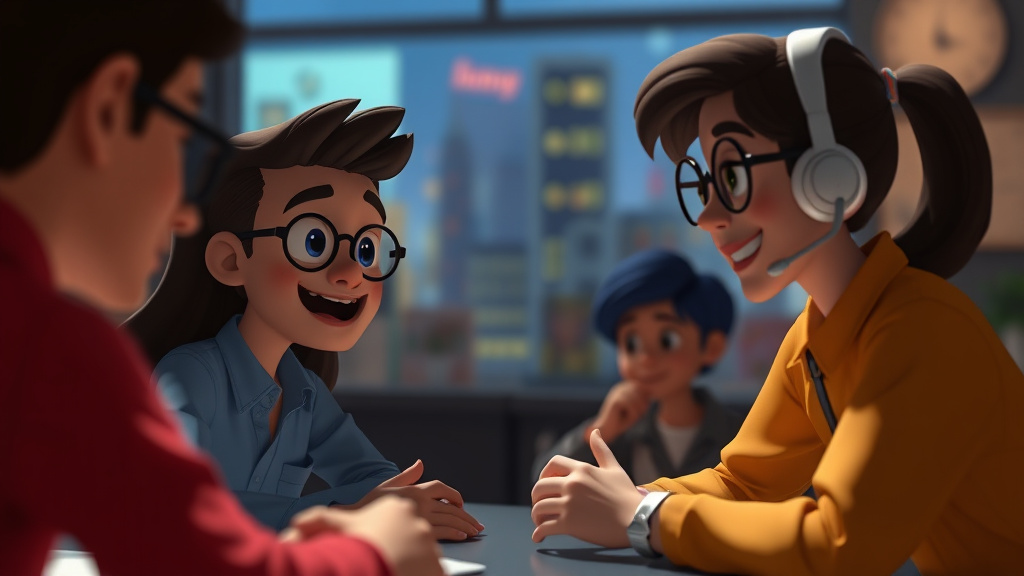
The animation industry is experiencing a artistic transformation as digital studios utilize cutting-edge technology to reshape storytelling itself. From artificial intelligence-powered character creation to immersive virtual production environments, animators are shattering established narrative structures and pursuing bold new artistic directions. This article analyzes how industry-leading firms are utilizing cutting-edge approaches—including real-time rendering, algorithmic animation, and interactive storytelling—to engage viewers and push the medium’s creative limits. Discover the revolutionary technologies and forward-thinking strategies redefining animation’s future.
Challenging Classic Plot Frameworks
Digital animation studios are fundamentally reimagining how stories develop visually by moving away from three-act structures and straightforward narratives. Modern animation creators work with broken chronologies, parallel narratives, and recursive storytelling methods that challenge viewer expectations. These groundbreaking methods utilize animation’s distinctive ability to represent sophisticated time-based concepts and conceptual material, creating narratives that seem original and mentally engaging while preserving emotional connection with audiences pursuing greater involvement.
The transition to experimental narrative approaches illustrates wider shifts in culture in how audiences consume media and make sense of information. Modern viewers, adapted to discontinuous media consumption through social media and streaming platforms, increasingly appreciate storytelling that echoes their disjointed experiences. Animation studios capitalize on this zeitgeist by developing stories that reward active viewing, invite analysis, and invite audiences to construct meaning from deliberately disjointed sequences and unclear narrative progressions.
Non-Linear Narrative Techniques
Non-linear storytelling in animation transcends simple flashback techniques, instead creating complex story structures where sequence and causality serve as adaptable artistic tools. Studios employ reverse chronology, multiple timeline intersections, and repeating narrative cycles that would be difficult or infeasible to execute in traditional live-action cinema. Animation’s natural versatility enables filmmakers to smoothly shift between distinct temporal spaces, viewpoint changes, and reality layers, allowing viewers to engage with stories as intricate interconnected networks rather than linear progressions from beginning to end.
This approach requires increased viewer engagement and thoughtful interpretation, converting passive consumption into participatory meaning-making. Digital tools enable animators to visualize complex narrative structures with exceptional detail, using imagery patterns, color palettes, and spatial relationships to lead spectators through complex storylines. By deliberately concealing information and disclosing plot elements in unanticipated arrangements, studios produce powerful moments of discovery that resonate more profoundly than standard narrative exposition.
- Inverted sequence uncovers character intentions through outcome-centered storytelling techniques
- Simultaneous narrative threads examine alternate conclusions from single pivotal narrative decisions
- Nested frameworks build multiple story layers for deeper significance
- Disjointed scenes demand viewer participation and personal narrative construction
- Compressed timeframes compress various time periods into overlapping visual impressions
Technological Advances Supporting Artistic Output
Modern digital animation studios utilize complex software systems and hardware systems that enable artists to bring to life their most ambitious creative visions. Real-time rendering engines, cloud-based teamwork solutions, and cutting-edge motion capture systems have democratized access to enterprise-level production capabilities. These technical infrastructure enable boutique studios to match major studios while preserving creative integrity and creative direction over their productions.
The convergence of hardware acceleration, advanced processing power, and intuitive software interfaces has substantially transformed how animators approach their craft. Artists can now explore intricate visual effects, adaptive lighting, and intricate character animations in real-time, substantially reducing iteration cycles. This technological empowerment fosters a culture of experimentation where creative risks become viable, encouraging studios to pursue unconventional narratives and visual styles formerly limited by technical limitations.
AI and Machine Learning Implementation
Artificial intelligence and AI systems are transforming animation production by automating repetitive tasks and enhancing creative capabilities. These intelligent systems analyze vast datasets of movement patterns, facial expressions, and scene dynamics to generate realistic animations that would normally take months of hands-on work. Studios employing AI-assisted tools report significant productivity improvements while preserving creative excellence, enabling production teams to concentrate on conceptual development and storytelling innovation.
Machine learning models built from diverse animation styles enable studios to produce contextually appropriate motion and gestures that reflect their artistic vision. Predictive algorithms support compositional choices, illumination refinement, and color grading, delivering intelligent suggestions that accelerate the creative process. Rather than replacing artists, these AI systems act as collaborative partners, enhancing human creativity and helping storytellers to achieve visually complex narratives on tight schedules.
- Automatic in-between generation decreases manual animation labor significantly.
- Forecast-based movement systems boost realistic motion performance.
- AI-powered content repositories optimize creative process productivity substantially.
- Machine learning face detection improves facial emotion authenticity.
- Intelligent rendering optimization enhances final output performance delivery.
Cooperative Worldwide Production Frameworks
The animation industry has fundamentally transformed through the adoption of worldwide joint production models that connect creative talent across continents. Digital studios now manage complex projects by leveraging distributed teams, each contributing specialized expertise from their respective regions. This decentralized approach not only enlarges the talent pool but also introduces diverse cultural perspectives that enrich storytelling. Studios like Disney and Pixar have adeptly developed international partnerships, combining the technical prowess of one region with the artistic sensibilities of another, resulting in more nuanced and globally resonant narratives.
These partnership models have become vital to modern animation production, allowing studios to maximize efficiency while upholding artistic standards. By allocating tasks across different geographic areas, production cycles increase substantially, allowing work to advance around the clock. Financial efficiencies result from deliberate delegation to regions with specialized animation expertise, especially in character setup, visual effects, and scenery creation. Furthermore, this approach promotes information sharing among cross-border groups, elevating industry standards and spurring creative development as diverse creative approaches blend together into innovative artistic outcomes.
Remote Teams and Virtual Workflows
Remote collaboration has revolutionized how animation studios operate, allowing seamless alignment between dispersed production teams without sacrificing quality or vision. Cloud-based platforms and real-time rendering technology allow animators to collaborate in parallel on identical projects, seeing updates instantaneously regardless of geographical location. This transition to virtual workflows has made accessible animation production, allowing smaller studios to rival industry giants by leveraging global talent networks. Sophisticated software tools enable file versioning, asset management, and collaborative editing, maintaining consistency across remote production chains while preserving artistic integrity throughout production phases.
The transition into remote work models has created unprecedented agility in animation production scheduling and team composition. Studios can now build specialized crews for distinct project phases, breaking up and rebuilding teams based on project needs rather than retaining full-time rosters. This flexibility decreases overhead spending while boosting creative capacity by combining the right talents for each production cycle. Virtual production environments facilitate live feedback sessions, allowing production leads to direct creative choices immediately, fostering collaborative problem-solving that speeds up revision processes and improves final product quality considerably.
- Cloud-based asset libraries provide immediate availability to production materials worldwide.
- Real-time collaboration tools facilitate concurrent modifications throughout multiple locations.
- Digital production environments replicate traditional facilities with computational accuracy.
- Geographic distribution speeds up project timelines through continuous workflow progression.
- Digital communication platforms enhance team cohesion in spite of geographical separation.
Viewer Participation By Way of Interactive Platforms
Digital animation studios are revolutionizing audience engagement by adopting interactive media platforms that change inactive audiences into involved contributors. These innovative approaches leverage advanced innovations to produce dynamic narratives where audiences shape story outcomes, character arcs, and artistic presentation. By weaving interactive components into animated productions, studios build deeper emotional connections and foster collaborative storytelling initiatives that extend far beyond conventional storytelling formats.
The shift toward engaging digital content represents a fundamental change in how animation studios understand audience relationships and how audiences consume content. Advanced rendering systems permit viewers to experience animated spaces at their own pace, uncovering secret plot elements and different narrative paths. This participatory model both enhances audience loyalty and enjoyment but also produces actionable analytics that guide future creative decisions and content development strategies across the industry.
Immersive Experiences and Cross-Platform Narratives
Transmedia storytelling has become a cornerstone method for digital animation studios aiming to maximize audience participation across various platforms and formats. By crafting linked stories that extend across animated series, interactive games, virtual reality experiences, and augmented reality applications, studios create immersive fictional universes that encourage exploration and sustained audience participation. This diverse strategy allows viewers to engage with content in manners consistent with their preferences and technological capabilities.
Immersive experiences powered by VR and AR technologies constitute the cutting edge of audience engagement in animation. These systems enable viewers to inhabit animated worlds, interact with characters in live interaction, and influence narrative progression through their decisions and interactions. Studios adopting immersive technologies document remarkable increases in viewer loyalty and engagement data, establishing interactive experiences as essential components of contemporary animation production strategies and future-focused creative development.
- Virtual reality experiences immerse viewers into fully realized animated worlds
- AR applications merge animated content with real-world environments seamlessly
- On-demand interactive platforms allow viewers to make narrative choices
- Story-driven gameplay combines animated elements with gameplay mechanics effectively
- Platform-based integration facilitates audience engagement in ongoing stories
